Every year, hundreds of workers suffer serious injuries—or worse—because machinery was re-energized unexpectedly during maintenance. These incidents aren’t just tragic; they’re almost always preventable. At the heart of that prevention is a simple but powerful safety procedure: lockout tagout, or LOTO.
LOTO is not a technical footnote in a safety manual—it’s a life-saving protocol used across manufacturing, utilities, construction, and industrial settings. It ensures that dangerous machines are properly shut off and cannot be restarted until maintenance or servicing is complete. Yet, despite its proven effectiveness, LOTO is often overlooked, misunderstood, or poorly implemented.
This guide cuts through the confusion. We’ll explain exactly how LOTO works, break down its core components, and show you how to make it operational in real-world environments. No fluff. No jargon without context. Just actionable insight.
Why Lockout Tagout Exists: The Hidden Risk of Stored Energy
Machines don’t stop being dangerous the moment you flip a switch. Residual energy—electrical, hydraulic, pneumatic, chemical, thermal, or mechanical—can remain trapped in systems long after shutdown. A pressurized valve, a charged capacitor, or a flywheel slowing down can all unleash catastrophic force.
Consider a real incident: a maintenance technician began cleaning an industrial mixer. The machine was off, but no LOTO procedures were applied. Another worker, unaware of the maintenance, activated the control panel remotely. The mixer engaged. The result: severe crush injuries.
This kind of scenario is why OSHA estimates that compliance with LOTO standards prevents an estimated 120 fatalities and 50,000 injuries annually in the U.S. alone.
LOTO exists to break the chain between human error and machine reactivation.
How Lockout Tagout Works: Step by Step
LOTO isn’t a single action—it’s a sequence. Skipping one step compromises the entire system. Here’s the standard procedure, aligned with OSHA 29 CFR 1910.147:
- Preparation
- Identify all energy sources powering the equipment. This includes main power, backup batteries, hydraulic lines, and even gravity-fed mechanisms.
- Notification
- Inform all affected employees that maintenance is about to begin and equipment will be locked out.
- Shutdown
- Use normal stopping procedures to power down the machine.
- Isolation
- Disconnect or block all energy-isolating devices (e.g., circuit breakers, disconnect switches, valve closures).
- Application of Locks and Tags
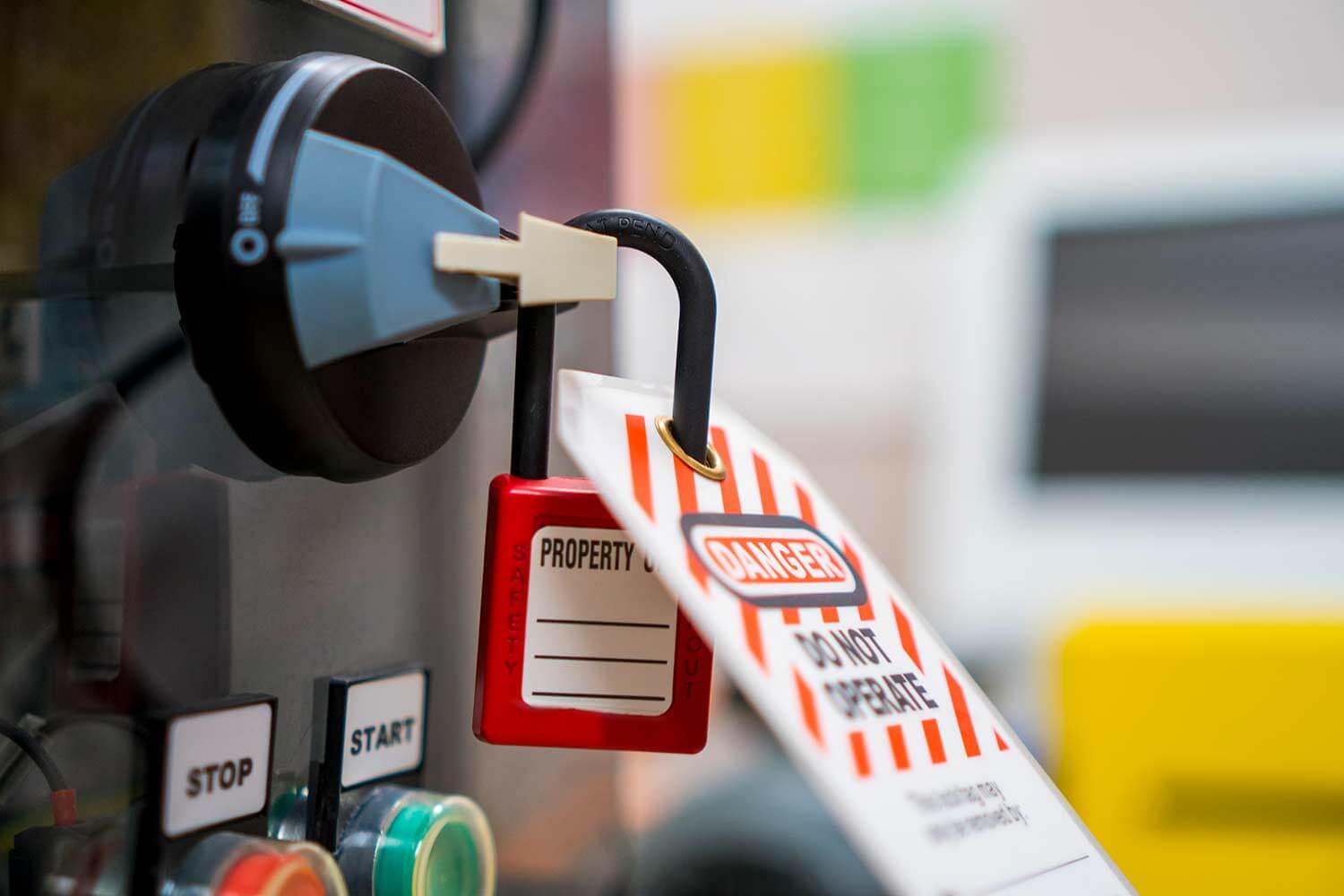
- Each authorized employee applies their personal lock and tag. The tag must include the worker’s name, date, and reason for the lockout.
- Control of Stored Energy
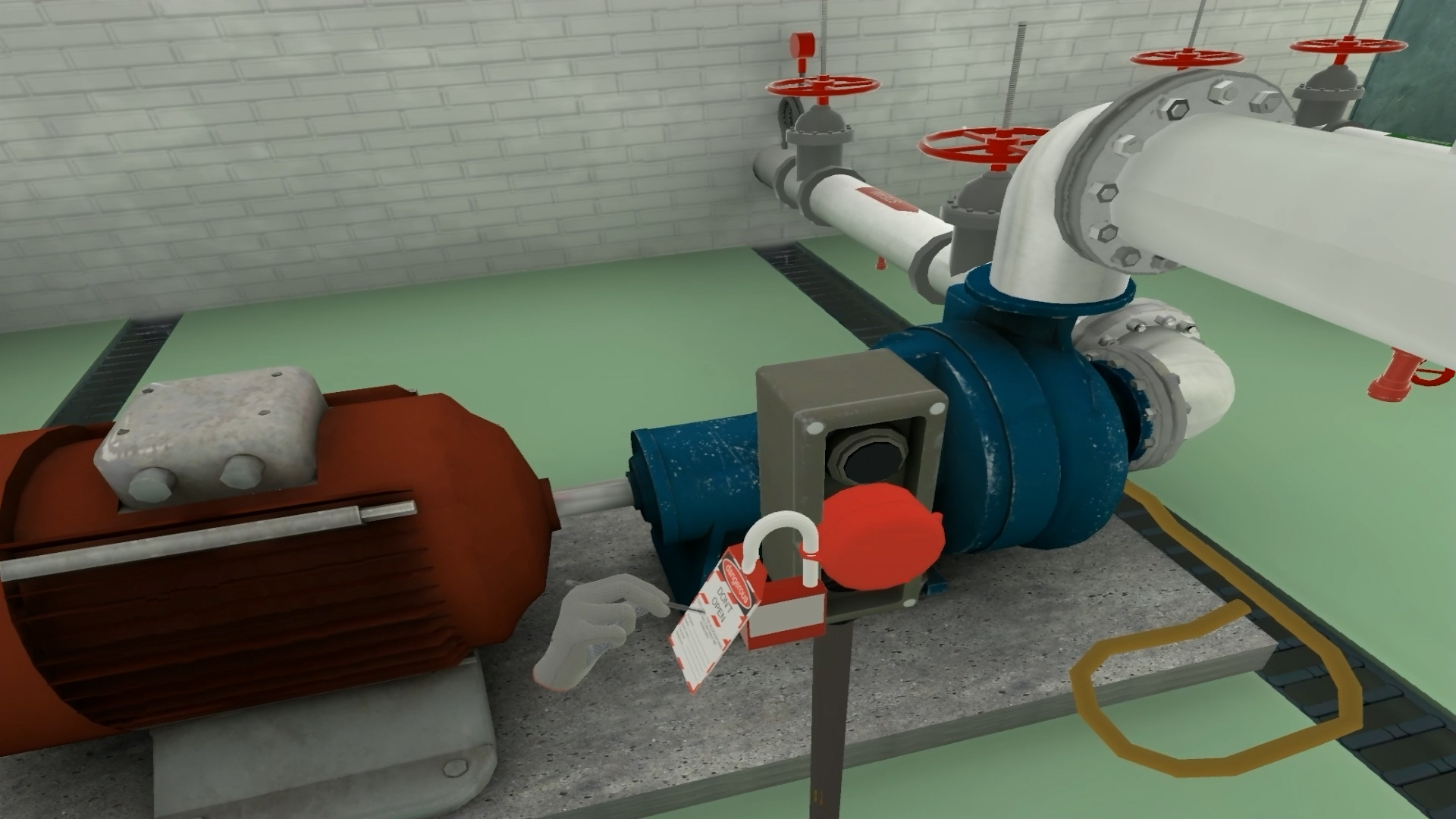
- Bleed off or block residual energy. Examples: grounding circuits, venting air lines, blocking moving parts.
- Verification of Isolation
- Attempt to restart the machine (using normal controls) to confirm it cannot operate. Return controls to “off” or “neutral.”
- Restoration
- After work is complete, verify tools are removed, personnel are clear, and only then remove locks and tags. Re-energize in reverse order.
One critical rule: Only the employee who applied the lock can remove it—unless a formal, documented exception procedure is followed.
Common LOTO Mistakes That Lead to Accidents
Even workplaces with LOTO programs make errors. These aren’t minor oversights—they’re frequent contributors to preventable incidents.
- Group Lockout Confusion
- In team maintenance, only one “primary” lock is sometimes used. But OSHA requires each worker to apply their own lock. Relying on a supervisor’s lock removes individual accountability.
- Tags Without Locks
- Tagout alone (without a physical lock) is permitted only if the energy-isolating device cannot be locked. But tags are easier to ignore or remove—creating a false sense of security.
- Using Master Keys to Bypass Locks
- Some facilities keep master keys to remove locks when workers are unavailable. This violates LOTO principles unless strict administrative controls and verification are in place.
- Skipping Stored Energy Control
- Workers shut off power but fail to release hydraulic pressure or secure suspended loads. The machine appears safe—until it’s not.
- Inadequate Training
- Affected employees (those who operate equipment) often receive minimal LOTO training. They need to understand not just the “how,” but the “why”—so they never override a lockout.
LOTO Devices: Tools That Make the System Work
LOTO relies on physical devices to enforce compliance. These aren’t accessories—they’re engineered controls. Choosing the right one matters.
| Device Type | Purpose | Common Use Case |
|---|---|---|
| Lockout Hasps | Allow multiple locks on one isolation point | Group maintenance on circuit breakers |
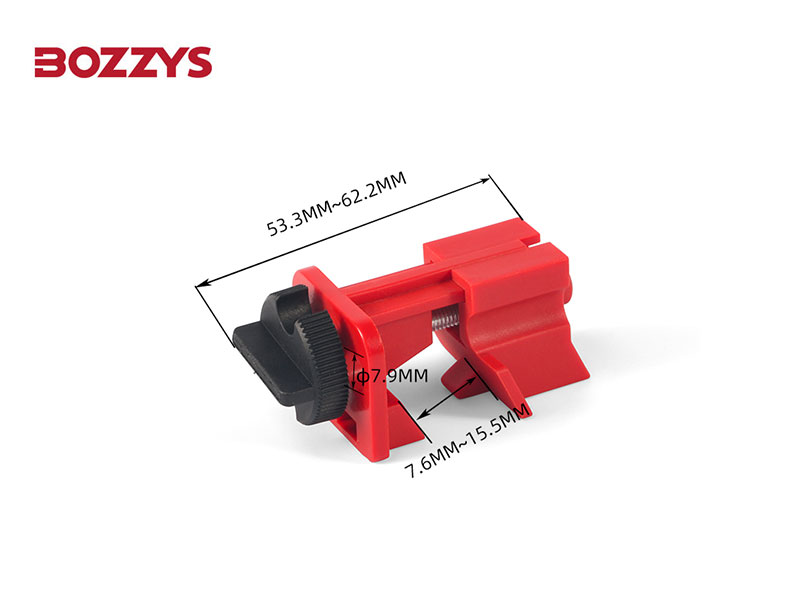
| Valve Lockouts | Prevent valve operation | Pneumatic or hydraulic systems |
| Circuit Breaker Locks | Secure electrical disconnects | Industrial control panels |
| Plug Lockouts | Block power cords | Portable equipment |
| Tagout Tags | Communicate warnings and ownership | Used with or without locks |
High-quality LOTO devices are durable, standardized in color (red is typical), and often include space for employee ID. They should resist tampering, environmental wear, and accidental dislodging.
Cheap or improvised devices—like zip ties or tape—should never substitute for proper lockout equipment. OSHA explicitly prohibits them.
Industries That Rely on LOTO—And Why
LOTO isn’t just for factories. Any environment with energized equipment risks requires it.
- Manufacturing
- Assembly lines, robotic arms, and presses store massive kinetic energy. Routine maintenance is frequent, increasing exposure risk.
- Utilities
- Power plants and substations deal with high-voltage systems. A single misstep can cause arc flashes or electrocution.
- Healthcare
- Hospital maintenance teams service medical gas systems, sterilizers, and HVAC units—all potential energy sources.
- Food Processing
- Mixers, slicers, and conveyors pose entanglement and amputation risks. Wet environments also increase electrical hazards.
- Warehousing and Distribution
- Automated sorting systems and forklift charging stations require lockout during servicing.
In each case, LOTO isn’t just about compliance. It’s about creating a culture where safety overrides urgency.
OSHA Compliance: What You Must Know
OSHA’s Control of Hazardous Energy standard (1910.147) is the backbone of LOTO regulation. Non-compliance isn’t just risky—it’s expensive.
Key requirements include:
- Written energy control procedures for each machine or process
- Annual audits of LOTO practices
- Training for both authorized employees (who perform lockout) and affected employees (who operate equipment)
- Use of locks where feasible; tags only when locks can’t be used
Penalties for violations can exceed $15,000 per instance. Willful or repeated violations push fines much higher.

But compliance isn’t a paperwork exercise. OSHA audits don’t just review documents—they observe procedures in action. If your team can’t demonstrate a correct LOTO sequence on the spot, you’re at risk.
Building a LOTO Program That Actually Works
A binders-on-a-shelf safety program fails. Effective LOTO requires integration into daily operations.
Start here:
- Conduct an Energy Inventory
- Map every machine and its energy sources. Document isolation points and required devices.
- Write Machine-Specific Procedures
- Generic checklists don’t cut it. A lathe requires different steps than a conveyor belt. Include diagrams if possible.
- Train—Then Retrain
- Initial training isn’t enough. Conduct refresher courses annually or after incidents. Use hands-on drills.
- Audit Regularly
- Watch employees perform LOTO. Identify gaps. Correct them immediately.
- Empower Employees
- Make it safe to speak up. If a worker sees a bypassed lockout, they should feel obligated—and protected—when reporting it.
- Use Visual Aids
- Post LOTO procedures near machines. Color-coded tags or floor markings reinforce awareness.
A strong program turns LOTO from a chore into a habit.
Real-World LOTO Success: A Case Study
A Midwest automotive parts manufacturer faced repeated near-misses during equipment maintenance. Investigation revealed inconsistent LOTO practices: shared locks, missing tags, no audits.
They overhauled their program:
- Created machine-specific LOTO instructions with photos
- Issued personal lock sets to every maintenance worker
- Implemented quarterly audits with third-party safety consultants
- Introduced a digital checklist system linked to work orders
Within 18 months, LOTO compliance rose from 62% to 98%. Zero lost-time incidents related to energy release occurred in the following two years.
The investment? Under $25,000. The ROI? Incalculable.
Final Thoughts: LOTO Is More Than a Procedure—It’s a Commitment
Lockout tagout isn’t about ticking a regulatory box. It’s about recognizing that behind every piece of equipment is a person whose safety depends on a few deliberate actions.
The cost of failure is too high—both in human and financial terms. The solution, however, is straightforward: consistent, well-trained, rigorously enforced LOTO.
Start today. Review your procedures. Watch someone perform a lockout. Ask: would this protect them if something went wrong?
If the answer isn’t an immediate yes, you have work to do.
Frequently Asked Questions
What is the difference between lockout and tagout? Lockout uses a physical lock to prevent machine activation. Tagout uses a warning tag. LOTO combines both, but lockout is required when feasible.
Who is responsible for applying LOTO? Authorized employees—those trained to service equipment—must apply their own locks and tags.
Can someone else remove my lock? Only under strict procedures, such as emergency removal with supervisor approval, verification that the worker is not at risk, and documented follow-up.
Do all machines need LOTO procedures? Any machine with hazardous energy sources that requires servicing or maintenance must have a LOTO protocol.
How often should LOTO training occur? Initial training is mandatory. Retraining is required at least annually and whenever procedures change or errors occur.
What happens during a LOTO audit? An auditor observes a lockout procedure, reviews written programs, and interviews employees to verify compliance with OSHA standards.
Are portable tools covered by LOTO? Yes, if they’re connected to a fixed power source or store significant energy. Plug lockouts are commonly used.
FAQ
What should you look for in What Is Lockout Tagout (LOTO) and Why It Matters? Focus on relevance, practical value, and how well the solution matches real user intent.
Is What Is Lockout Tagout (LOTO) and Why It Matters suitable for beginners? That depends on the workflow, but a clear step-by-step approach usually makes it easier to start.
How do you compare options around What Is Lockout Tagout (LOTO) and Why It Matters? Compare features, trust signals, limitations, pricing, and ease of implementation.
What mistakes should you avoid? Avoid generic choices, weak validation, and decisions based only on marketing claims.
What is the next best step? Shortlist the most relevant options, validate them quickly, and refine from real-world results.