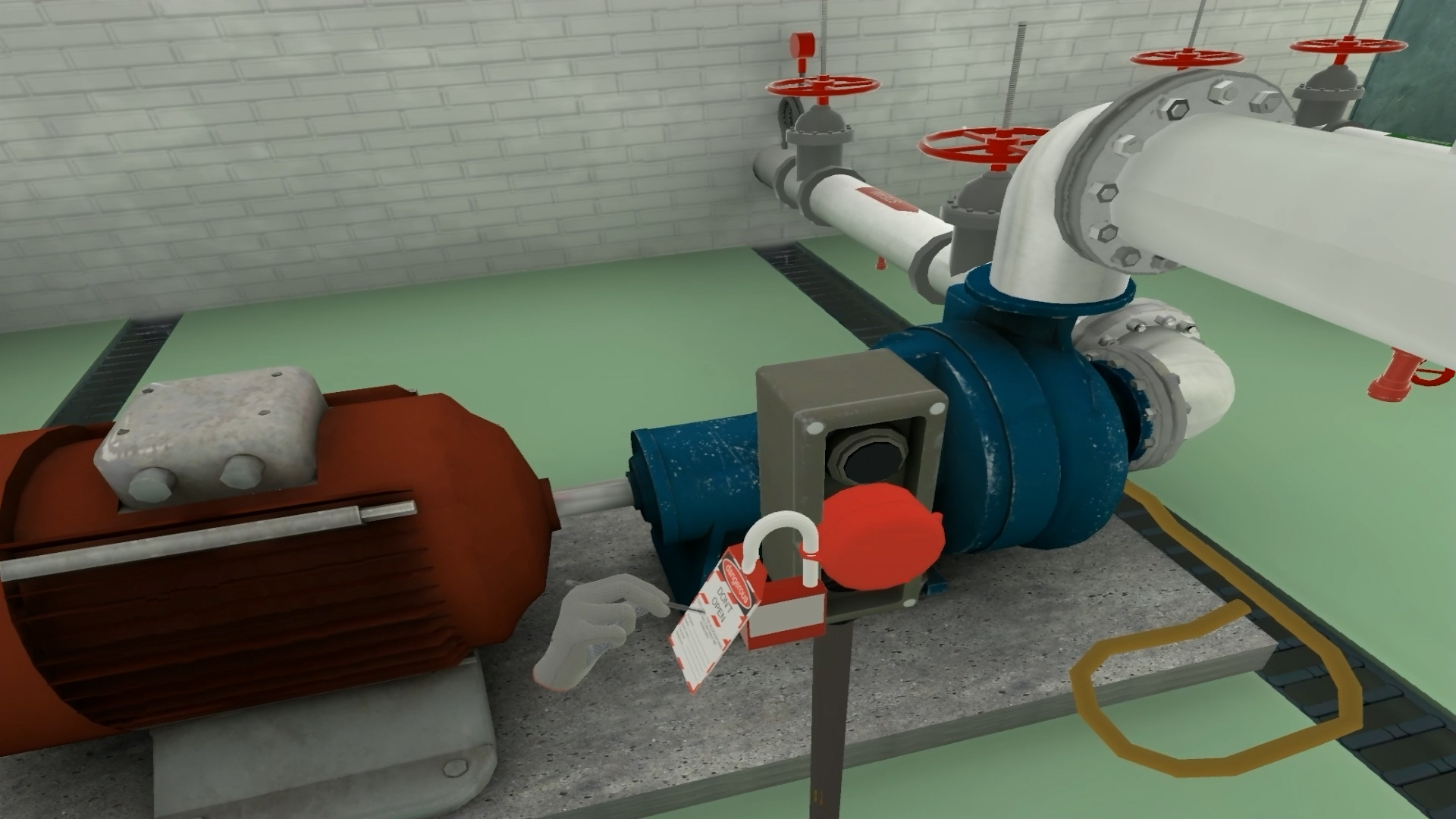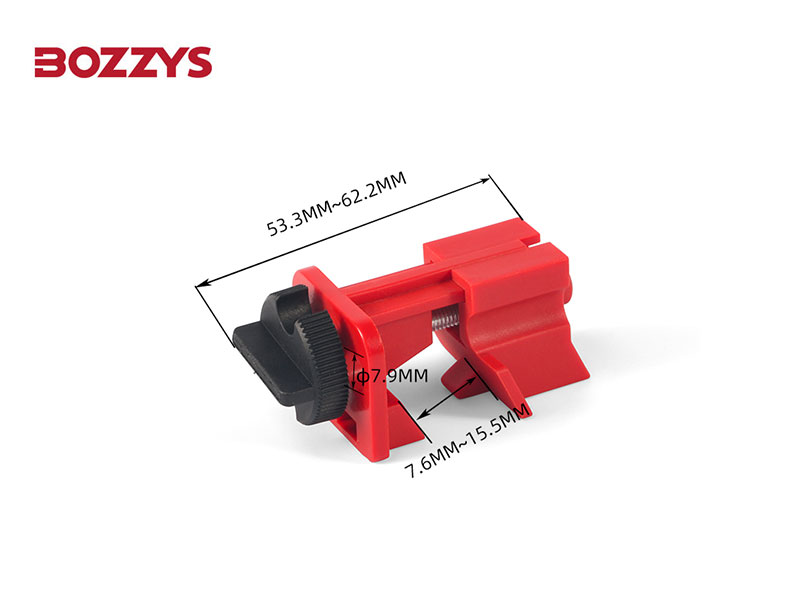
Every year, preventable electrical accidents occur during equipment maintenance—often because a simple circuit breaker was re-energized without warning. Workers assume power is off. Then, a switch flips elsewhere. The result? Electrocution, arc flashes, or fatal injuries. The solution isn't complex—it's mechanical, reliable, and enforceable: lockout tagout breaker locks.
These small, durable devices physically prevent circuit breakers from being closed (turned on) while maintenance or repair work is underway. Unlike tags alone, which are passive warnings, breaker locks enforce control. They are the literal lock in lockout tagout (LOTO) procedures—ensuring no one, not even someone unaware, can accidentally restore power.
This article dives into how breaker locks work, the types available, real-world applications, and why choosing the right one matters for safety and compliance.
Why Breaker Locks Are Non-Negotiable in LOTO Programs
OSHA standard 29 CFR 1910.147 mandates a formal control of hazardous energy program. At its core: before any servicing of energized equipment, all energy sources must be isolated and secured. For electrical systems, this starts at the breaker panel.
Tags alone aren’t enough. OSHA permits tags only when locks can’t be used—and even then, additional safety measures are required. That’s because tags can be ignored, overlooked, or fall off. Locks, however, require intentional removal with a key or personal padlock, creating accountability.
Breaker locks bridge the gap between policy and practice. They ensure:
- Positive physical isolation of electrical circuits
- Individual accountability through personal locks
- Clear visual indication that work is in progress
- Compliance with OSHA, NFPA 70E, and internal safety audits
Ignoring breaker locks turns LOTO from a safeguard into a paperwork exercise—one that fails the moment someone resets a breaker.
Types of Lockout Tagout Breaker Locks
Not all breaker locks work for every panel or breaker type. Choosing the wrong one leads to improper fit, false security, or complete incompatibility. Here are the most common types used across industries.
1. Sliding Panel Breaker Locks Designed for breakers behind a removable panel, these locks clamp over the panel latch, preventing access to the breakers. They’re common in industrial panels where multiple circuits are housed behind one cover.
Best for: Large distribution panels, multi-circuit systems Limitation: Doesn’t lock individual breakers—only access
2. Individual Circuit Breaker Locks (Snap-On)
These wrap around the toggle of a single breaker, physically blocking it from being flipped to the “on” position. Made from durable nylon or polycarbonate, they’re available in standard, mini, and tandem sizes.
Best for: Routine maintenance on specific circuits Tip: Match lock size precisely to breaker width—oversized locks can slip off

3. Universal Breaker Locks with Adjustable Straps Use a flexible strap and locking mechanism to secure various breaker sizes. While not as rigid as snap-on models, they offer versatility in mixed-panel environments.
Best for: Facilities with multiple breaker brands or irregular sizes Downside: Less tamper-resistant than molded locks
4. Breaker Lockout Hasps for Group Lockout Used with multi-lock hasps, these allow multiple workers to apply their personal locks to a single breaker. Ensures no one can re-energize until all have completed their tasks.
Best for: Team maintenance projects Critical: Each technician must use their own lock and key
5. Paddle Handle Locks for Molded Case Breakers Used on larger industrial breakers with rotating handles. These locks fit over the handle in the off position, preventing rotation.
Best for: High-amperage systems, switchgear rooms Requirement: Often used with挂牌 (tagging) and secondary isolation
How Breaker Locks Fit Into a Complete LOTO Workflow
A lock is only effective within a disciplined process. Here’s how breaker locks integrate into a standard LOTO sequence:
- Notify affected personnel – Alert everyone that maintenance is starting.
- Shut down equipment – Use normal stop procedures.
- Isolate energy sources – Open circuit breakers at the panel.
- Apply breaker lock – Install the appropriate lock on each relevant breaker.
- Attach tag – List worker name, department, time, and reason.
- Verify isolation – Test circuits with a voltage meter to confirm zero energy.
- Perform maintenance – Only after verification.
- Remove locks only after work completion – Each worker removes their own lock.
Skipping verification (step 6) is one of the most common fatal mistakes. A lock doesn’t guarantee zero energy—faulty breakers, backfeeds, or capacitor discharge can still energize a line. Always test before touch.
Real-World Applications and Common Mistakes
Application: Preventing Arc Flash During Motor Repair A maintenance technician needs to replace a burnt-out motor in a conveyor system. After shutting down the line, they open the breaker in the motor control center (MCC). Without a breaker lock, another worker could re-energize the circuit during shift change. By installing a snap-on breaker lock and tagging it, the technician ensures no accidental restart—protecting against arc flash and electrocution.
Application: Lockout During Building Electrical Upgrades During a panel upgrade, an electrician must work on live components downstream. Even with the main breaker off, adjacent circuits remain energized. Using sliding panel locks and individual breaker locks on all related circuits prevents accidental re-energizing by facility staff unaware of the work.
Common Mistakes to Avoid:

- Using damaged or worn locks – Cracked housings or stiff mechanisms compromise security
- Sharing lock keys – Each worker must have sole control of their lock
- Failing to isolate all energy sources – Hydraulic, pneumatic, or stored electrical energy can still pose risks
- Relying only on electronic interlocks – These can fail; mechanical locks are the baseline
Top 5 Lockout Tagout Breaker Locks in 2024
Choosing reliable hardware matters. These five models are widely trusted across manufacturing, utilities, and facilities management.
| Product | Type | Key Feature | Best Use Case |
|---|---|---|---|
| Grace Industries 701-AS | Snap-On | UV-resistant nylon, fits standard breakers | General industrial panels |
| Safely 340-LOTO | Adjustable Strap | Universal fit, 10-pack for cost efficiency | Mixed breaker environments |
| Master Lock 4690DAT | Digital Combo Lockout | No keys needed, user-defined codes | High-turnover or shared teams |
| Werner LOTO-110 | Sliding Panel Lock | Steel-reinforced, weather-resistant | Outdoor or harsh environments |
| Seton 51993 | Multi-Breaker Block | Secures up to 6 breakers at once | Large control panels |
When sourcing breaker locks, prioritize durability, compatibility, and compliance markings. Look for products tested to ASTM F1287 or equivalent standards.
Compliance Isn’t Optional—It’s Enforced
OSHA inspections routinely cite LOTO violations—especially when locks are missing, misused, or absent from breaker panels. Common penalties include:
- $15,000+ per violation
- Mandatory retraining
- Increased scrutiny on future audits
But beyond fines, the real cost is human. The U.S. Bureau of Labor Statistics reports that failure to control hazardous energy causes nearly 10% of serious accidents in manufacturing. Most are preventable with proper lockout procedures—and the right breaker locks.
NFPA 70E further strengthens requirements, mandating an electrically safe work condition before any work near exposed conductors. Breaker locks are foundational to achieving that condition.
Selecting the Right Breaker Lock: A Practical Checklist Before purchasing or deploying breaker locks, verify the following:
✅ Breaker type and size – Measure toggle width and depth ✅ Material durability – Choose UV-resistant, non-conductive materials ✅ Lock compatibility – Ensure padlocks (or internal locks) meet site standards ✅ Visibility and tagging capability – Must support durable tag attachment ✅ Quantity needed – Stock enough for routine and simultaneous maintenance
Test-fit sample locks before bulk ordering. A lock that looks right online may not fit your Square D, Siemens, or Eaton breakers.
Invest in Safety, Not Just Compliance
Lockout tagout breaker locks aren’t just tools—they’re safeguards for human lives. They transform a potentially fatal oversight into a preventable pause. In high-risk environments, where a split-second re-energization can end a career or a life, these devices are non-negotiable.
Audits will come and go. Regulations evolve. But the principle remains: if you can’t see it locked out, you can’t assume it’s safe.
Equip your team with the right breaker locks. Train them rigorously. Enforce accountability. Because when the lights go out for maintenance, the only thing that should stay on is safety.
Frequently Asked Questions
What is a lockout tagout breaker lock? A device that physically prevents a circuit breaker from being turned on during maintenance, ensuring electrical isolation.
Can I use a tag instead of a lock on a breaker? Only if a lock can’t be used—and even then, OSHA requires additional protective measures.
Do breaker locks work on all circuit breakers? No—different models fit specific breaker types. Always verify compatibility before use.
How many locks can be applied to one breaker? Multiple locks can be used via a hasp or lockout adapter, especially during group maintenance.
Are breaker locks required by OSHA? Yes, under 29 CFR 1910.147, lockout devices must be used to control hazardous energy, including electrical sources.
What materials are breaker locks made from? Most are made from non-conductive, durable plastics like nylon or polycarbonate to resist heat, UV, and impact.
Can breaker locks be reused? Yes, if they remain undamaged and function properly. Inspect before each use.
FAQ
What should you look for in Lockout Tagout Breaker Locks: Safety Essentials for Electrical Control? Focus on relevance, practical value, and how well the solution matches real user intent.
Is Lockout Tagout Breaker Locks: Safety Essentials for Electrical Control suitable for beginners? That depends on the workflow, but a clear step-by-step approach usually makes it easier to start.
How do you compare options around Lockout Tagout Breaker Locks: Safety Essentials for Electrical Control? Compare features, trust signals, limitations, pricing, and ease of implementation.
What mistakes should you avoid? Avoid generic choices, weak validation, and decisions based only on marketing claims.
What is the next best step? Shortlist the most relevant options, validate them quickly, and refine from real-world results.